High Schoolers Delivering Science of Reading — For Real
Here is a question worth sitting with: What if your high school CTE students could deliver a science of reading intervention to a struggling second grader — benchmarking, selecting the right approach, and delivering it daily — all before they graduate?
Not in a simulation. In a real classroom, with a real kid.
That is what MEC Scholars does.
Hear directly from CTE educators bringing the RISE Credential into their classrooms, and what it has meant for the students earning it. https://vimeo.com/1191588285
We’ve Underestimated CTE Students
Most CTE Educator Preparation programs keep students in the shallow end — observation hours, child development theory, lesson plan templates.
The unspoken assumption: the deep content of teaching is too complex for a 16-year-old.
Consider what we ask of students in other CTE pathways. Health Science students perform clinical assessments. Engineering students calculate load-bearing tolerances. Culinary students run professional kitchens.
We have never doubted CTE students can handle complexity. Why have we doubted it in education?
Notes From MEC Scholars
What MEC Scholars Are Actually Doing
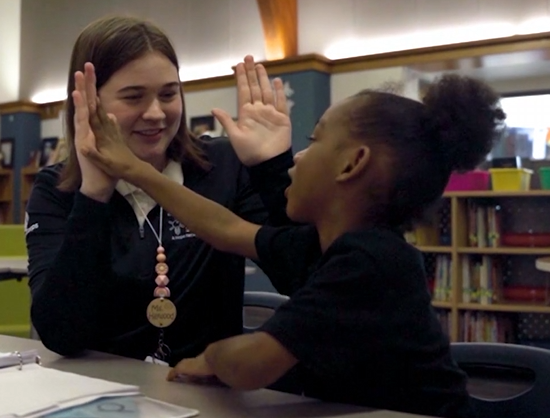
MEC Scholars are placed in K–3 classrooms as literacy intervention aides. Trained. Supervised. Doing real work.
In the fall, they study the Five Pillars of Literacy and the MTSS framework — the same foundational content covered in undergraduate teacher preparation programs.
In the winter, they benchmark students, enter data into a professional data management system, build an intervention caseload, and deliver scripted, research-based interventions daily. They progress monitor weekly. They communicate results to classroom teachers — professionally, following FERPA guidelines.
In the spring, they reflect on student growth and their own. They build a portfolio. They update their résumé.
This is not a participation experience.
This is a year-long clinical placement with real accountability, real data, and real students depending on them.
The RISE Credential: Proof of What They Can Do
Scholars who complete the program earn the RISE Credential — Readiness in Instructional Support & Education.
It is aligned to Perkins V standards and CIP 13.000, assessed by rubric across seven instructional units.
For students weighing the cost of college, that head start matters.
Hear from MEC Scholar alumni and a CTE instructor about how the program shaped their classroom experiences and inspired their career paths. https://vimeo.com/1097564916
Two Problems. One Solution.
Michigan ranks 44th in the nation for 4th-grade reading proficiency.
Michigan is also facing a teacher shortage that is not resolving itself.
CTE Educator Preparation is one of the most direct tools available to address both problems at once. Students who do real instructional work — not shadowing, but serving — are more likely to pursue education careers and persist in them.
MEC Scholars doesn’t just expose students to teaching. It builds their identity as educators.
The only question left:
If your CTE Educator Preparation students could learn the Science of Reading, conduct real assessments, and make data-based decisions that help struggling readers — why wouldn’t you want that for them?
Ready to bring MEC Scholars to your district?
To learn more or connect with our MEC Scholars Program Manager, visit mieducationcorps.org/scholars or reach Grace Kelley at GKelley@hopenetwork.org.